



Man Makes Over $8 Million From AI Music and Bot Streaming, Sentenced to 18 Months in Prison

A United States musician has been sentenced to 18 months in federal prison after using thousands of automated accounts to generate billions of fake streams of AI-generated music and fraudulently collect more than $8 million in royalties.
Michael Smith, 54, from Cornelius, North Carolina, was sentenced on October 6, 2026, after pleading guilty to conspiracy to commit wire fraud. The case has drawn attention across the global music industry because it demonstrates how artificial intelligence and automated streaming systems can be exploited to manipulate royalty payments.
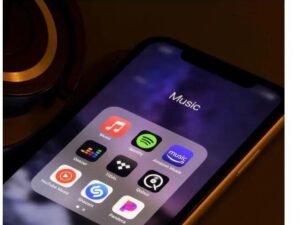
According to the U.S. Department of Justice, Smith operated the scheme between 2017 and 2024, using automated software, commonly known as bots, to repeatedly play music he owned on streaming platforms, including Spotify, Apple Music, Amazon Music and YouTube Music.
The fraudulent activity generated more than $8 million in royalty payments. In addition to his prison sentence, Smith was ordered to serve two years of supervised release and forfeit $8,091,843.64.
Federal prosecutors described the case as the first criminal prosecution of its kind involving music streaming fraud assisted by AI technology.
How Michael Smith Used AI and Bots to Generate Millions
Court documents reveal that Smith created thousands of fraudulent accounts on music streaming platforms and used automated programs to play songs repeatedly without genuine listeners.
To supply the accounts with enough music, Smith obtained hundreds of thousands of AI-generated tracks, which he uploaded to streaming services under his control. The automated accounts then streamed the songs billions of times, generating royalty payments that would ordinarily be distributed among artists, songwriters and other rights holders.
The scheme was designed to avoid attracting attention from streaming platforms’ fraud detection systems. Rather than concentrating the fake plays on a small number of songs, Smith distributed them across thousands of tracks to make the activity appear less suspicious.
Prosecutors said he used as many as 10,000 bot accounts at a time. The accounts were created using fake email addresses and fraudulently obtained debit cards.
An email cited in the case showed Smith expressing the need to obtain large numbers of songs quickly to work around streaming platforms’ anti-fraud policies.
By combining mass-produced AI music with automated streaming, he was able to generate substantial royalty payments without the corresponding audience of genuine listeners.

AI Songs Recorded More Streams Than Taylor Swift’s Catalogue in One Comparison
One of the most striking details disclosed by federal prosecutors concerned the scale of the fraudulent streaming activity.
In April 2023, Taylor Swift’s entire catalogue reportedly received 9.3 million streams on YouTube Music through family-plan accounts. During the same month, Smith’s bot accounts generated approximately 80.9 million fraudulent streams of his AI-generated music through family plans.
The comparison illustrates the extraordinary volume of artificial activity involved in the scheme.
Unlike legitimate streaming, where plays reflect actual listeners choosing to listen to music, the bot-generated activity created a false impression of demand. The resulting royalty payments rewarded the operator of the scheme rather than being distributed according to genuine consumer listening.
The case also highlights a major challenge facing streaming services: distinguishing legitimate listening activity from automated plays designed to exploit royalty payment systems.
How Fake Streams Affect Genuine Musicians
Music streaming services generally distribute royalties through systems influenced by the number of eligible streams recorded during a particular period.
When fraudulent streams are counted as legitimate activity, the operator responsible can collect payments that should not have been earned. Under a pooled royalty model, artificial streams can also dilute the share available to legitimate artists and songwriters.
This is particularly concerning for emerging and independent musicians, who often depend on streaming royalties, audience growth and genuine engagement to build sustainable careers.
For an upcoming artist investing money in recording, promotion, distribution and marketing, competing against artificial streams creates an unfair environment. Fake streaming activity can inflate the apparent popularity of a track without demonstrating that real listeners enjoy it, follow the artist or return to hear more music.
The Smith case therefore raises important questions about transparency, royalty distribution and the responsibility of digital streaming platforms to protect musicians from manipulation.
Michael Smith Ordered to Forfeit More Than $8 Million
Smith’s legal case began in September 2024, when federal authorities announced charges connected to the alleged scheme.
At that stage, prosecutors alleged that the operation had generated more than $10 million in fraudulent royalties. The case subsequently progressed through the federal court system, and Smith pleaded guilty to one count of conspiracy to commit wire fraud in March 2026.
On October 6, 2026, a federal judge sentenced him to 18 months in prison and imposed two years of supervised release. He was also ordered to forfeit $8,091,843.64.
The forfeiture order represents the financial consequences of the fraudulent operation. It is important to distinguish this final sentencing outcome from the larger amount cited in the original 2024 allegations.
The sentence sends a warning to individuals who attempt to exploit digital music platforms through automated activity, fraudulent accounts or manipulated listening figures.

Does This Mean AI-Generated Music Is Illegal?
No. The case does not establish that producing or releasing AI-generated music is illegal in itself.
The criminal conduct centred on the deliberate use of bots, fraudulent accounts and manipulated streaming activity to obtain royalty payments unlawfully.
Artists can use AI tools as part of their creative process, provided they comply with applicable laws, copyright requirements and the terms of the platforms they use. The distinction is between creating and distributing music legitimately and manufacturing fake listening activity to deceive streaming services.
For independent artists, the case is a reminder that genuine audience development remains more valuable than artificially inflated numbers that do not represent real fans.
What the Case Means for the Future of Music Streaming
The case comes at a time when artificial intelligence is making music production faster and more accessible, while streaming platforms face increasing pressure to identify fake tracks, automated listening and royalty manipulation.
AI tools can help musicians experiment with sounds, develop ideas and create new material. However, the ability to produce large volumes of songs also creates opportunities for people seeking to exploit streaming systems.
Music platforms must therefore continue improving fraud detection, account verification and royalty protection measures. Artists and distributors also need to understand platform policies and avoid services promising artificial streams or guaranteed popularity through suspicious methods.
For musicians seeking to build careers, the long-term objective should be to attract real listeners, encourage repeat plays, develop a loyal fan base and establish a credible presence across digital platforms.
Michael Smith’s case demonstrates that billions of recorded streams do not necessarily represent genuine popularity. Behind impressive streaming statistics, there may be automated activity that creates an illusion of success while depriving legitimate music creators of their rightful earnings.
As the music industry continues to adapt to AI, the challenge will be to preserve the benefits of new technology while ensuring that artists are rewarded for authentic engagement rather than manipulated numbers.
The case serves as a significant warning to the global music industry: technology can expand creative possibilities, but using it to defraud streaming platforms and manipulate royalties can carry serious criminal and financial consequences.